
Pre-Work Payment Terms as a Collections Foundation
Effective collections begin before the first invoice is sent. The contract should state the payment due date (e.g., net-30), any late-fee percentage that will apply to overdue balances, and the escalation path the contractor will follow if payment is not received. When these terms are agreed in writing before work starts, the contractor has a clear, enforceable basis for every follow-up action in the collections workflow.
0
1
Tags
Electrical Contracting Business Operations
Running an Electrical Contracting Business Course
Related
Pre-Work Payment Terms as a Collections Foundation
Aging Bucket Tracking for Electrical Contractor Receivables
Collection Contact Documentation for Electrical Contractors
When a customer has not paid an invoice by its due date, your electrical contracting business should follow an escalation process to collect the amount owed. Arrange the following collections steps in the correct order, from first action to last resort.
Which of the following best explains the rationale behind using a graduated collections workflow that moves from friendly reminders to formal demand letters, and finally to legal remedies?
Match each practical scenario to the corresponding stage of a graduated collections workflow for an electrical contracting business.
An electrical contractor's collections workflow immediately escalates to formal demand letters for any invoice past due, resulting in fast payments but a significant loss of repeat customers. This outcome indicates that the workflow is prioritizing the conversion of receivables into cash at the direct expense of keeping relationships professional.
An electrical contractor evaluates their practice of immediately threatening legal action on late invoices and determines it is severely damaging customer retention and creating legal risks. To resolve this, they conclude they must adopt a documented ____ ____ that systematically escalates from friendly reminders to formal remedies, balancing the need to convert receivables into cash while keeping relationships professional.
You are setting up a collections workflow for your new electrical contracting business. Your customers are mostly homeowners and small landlords who often pay within a few days of being reminded. You want a workflow that reliably converts overdue invoices into cash while protecting long-term relationships and staying within legal limits. Which of the following workflow designs best meets all of these goals?
Invoice terms for all customers: Net 30.
An electrical contractor uses a documented, step-by-step collections workflow for unpaid invoices. Which of the following best explains how this structured approach helps the business stay within 'legal boundaries'?
What is the primary goal of a documented 'collections workflow' in an electrical contracting business?
Match each stage of an electrical contractor's collections workflow to the specific business purpose it serves in balancing the goals of cash recovery, professional relationships, and legal compliance.
In the management of an electrical contracting business, why is it beneficial to use a documented collections workflow rather than handling each late payment on an informal, case-by-case basis?
Learn After
Early-Stage Collection Actions for Electrical Invoices
What specific terms should be agreed upon in writing before electrical work begins to establish a strong foundation for collections?
Effective collections for an electrical contracting business begin after the first overdue invoice is sent to the customer.
Match each pre-work contract element with its specific role in establishing an enforceable collections foundation.
As an electrical contractor defining your standard operating procedures for a new installation project, arrange the following actions in the correct chronological order to establish and execute an enforceable collections foundation.
An electrical contractor audits their accounts receivable to understand why customers frequently dispute late fees and ignore payment escalation warnings. Upon reviewing the project timelines, the contractor identifies the root cause: by failing to include payment due dates, late-fee percentages, and escalation paths in the initial agreement before work started, their subsequent collection actions lacked a clear, ________ basis.
Three electrical contractors each handle payment terms differently before starting a commercial tenant-improvement project. Review their approaches and determine which contractor has established the strongest, most enforceable foundation for collecting payment if the customer later fails to pay on time.
Contractor A: Verbally tells the customer that payment is expected within 30 days and mentions there could be late fees if the bill isn't paid on time. The contractor follows up with a friendly
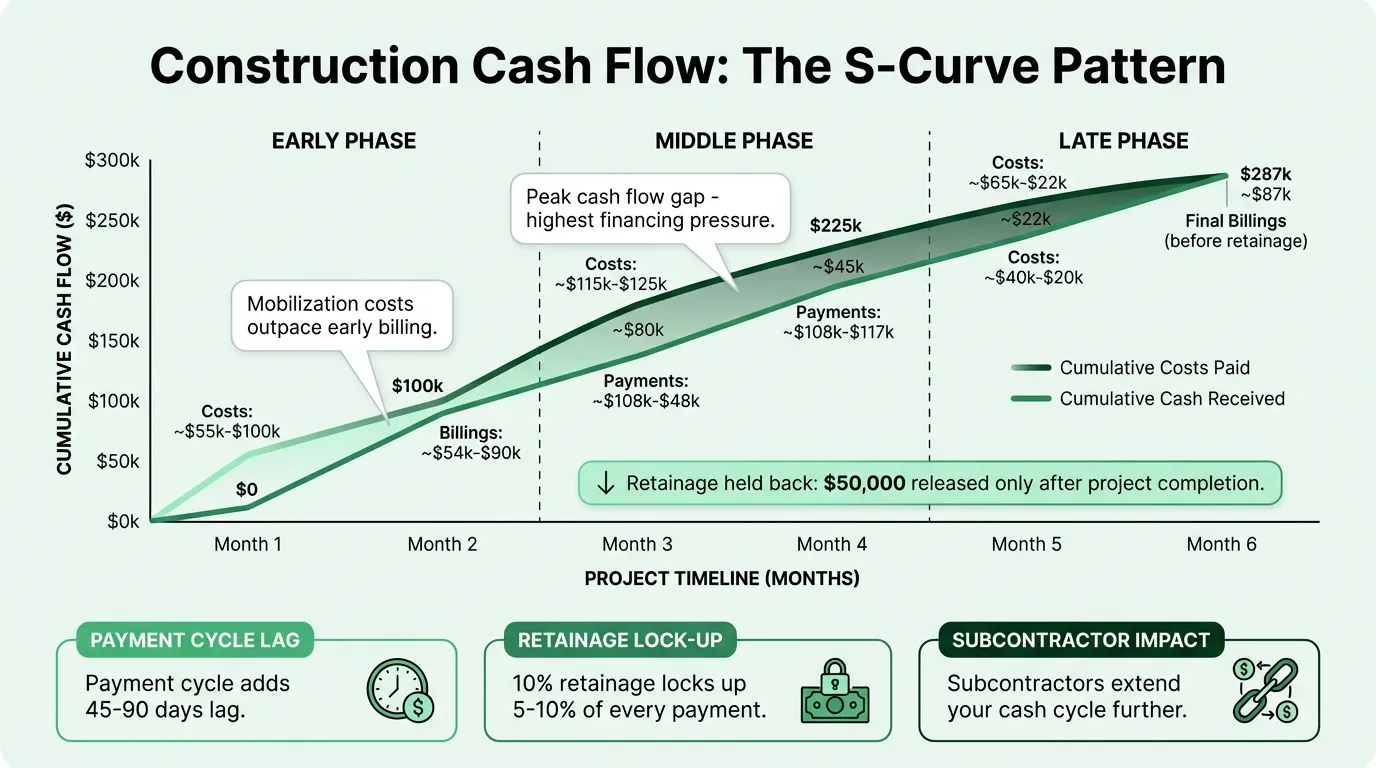
The provided infographic highlights a common 'cash-flow gap' where electrical contractors must pay for labor and materials long before receiving payment from the customer. To protect your business against this risk, you must develop a robust 'Collections Foundation.' Arrange the following steps in the correct order to design and implement this foundation for a new project.
An electrical contractor’s standard contract includes a 'Net-30' payment deadline and a specific '2% monthly late fee,' but it does not outline an 'escalation path.' After a commercial client misses the payment deadline by 45 days, the contractor finds themselves hesitant to take action, worrying that a phone call might seem too aggressive. Which statement best analyzes why this specific gap in the collections foundation is problematic for the business?
To protect your business from the 'cash-flow gap' shown in the infographic—where you must pay for labor and materials long before receiving payment—you are tasked with designing a 'Collections-First' Onboarding Protocol. Arrange the following components in the logical order they must be developed and finalized to create an airtight, enforceable foundation before you start any electrical project.
Considering the 'cash-flow gap' illustrated in the infographic—where an electrical contractor incurs significant costs for labor and materials long before receiving payment—evaluate the following business strategy:
To make their agreements feel less 'confrontational' for residential customers, a contractor decides to include only a 'Net-30' payment due date in their contracts, deliberately omitting specific late-fee percentages and escalation paths.
Evaluate the impact of this 'simplified' ap