
Truck Stock Vehicle Security Practices
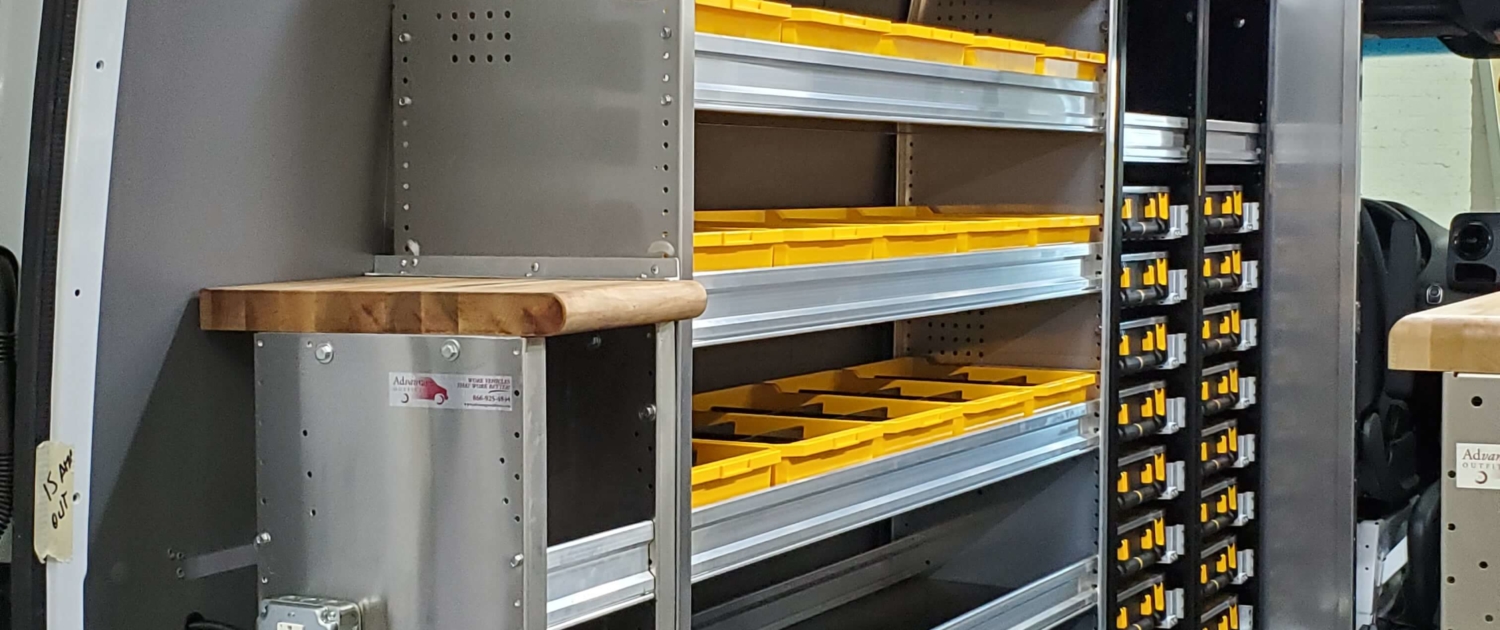
Because truck stock rides on a vehicle parked at job sites and overnight locations, physical security is essential. Lock all tool compartments and cargo areas when the vehicle is unattended. Expensive items such as breakers, GFCI devices, and copper wire are common theft targets. Locked enclosures and controlled access for high-value electrical components reduce shrinkage. Security also supports accurate inventory counts—if items disappear between restocking cycles, usage data and job-cost records become unreliable.
0
1
Tags
Electrical Contracting Business Operations
Running an Electrical Contracting Business Course
Related
Truck Stock Item Categories for Service Electricians
Truck Stock Vehicle Security Practices
What is the primary purpose of maintaining standardized 'truck stock' on an electrical contractor's service vehicles?
A new electrical contracting business owner is setting up a system to keep service trucks properly stocked with common materials. Arrange the following steps in the correct order to establish and maintain an ongoing truck stock management cycle.
Match each real-world management action to the essential component of truck stock management it demonstrates.
A service manager is analyzing a recurring issue where a technician's vehicle runs out of common materials by mid-week, resulting in unbillable trips to the supply house. The manager thoroughly investigates and verifies that the vehicle's defined item list is highly accurate for the week's routine calls and that the vehicle is entirely secure from theft. True or False: Because the initial inventory list and security measures are fully intact, the manager can logically deduce that the systemic fa
An operations manager evaluates a failing truck stock system. They verify that the vehicles are securely locked, inventory is faithfully replenished every morning, and technicians flawlessly track their per-job usage. However, technicians are still forced to visit the supply house during routine residential calls because the vans are inexplicably stocked with rare, highly specialized commercial parts rather than standard residential outlets and wire nuts. Evaluating this operational failure, the
You are launching a two-van electrical service company and must design a complete truck stock management system before your first day of operations. You draft four possible plans. Which plan, as designed, contains every essential component needed to sustain a fully functional truck stock operation over time?
An electrical business owner reviews the month-end reports for a service van and identifies a discrepancy: the technician's 'Per-Job Usage Logs' show that 40 GFCI outlets were installed across all jobs, but the 'Replenishment Orders' show that 55 outlets were required to return the van to its 'Defined Item List' level. The owner confirms that vehicle security is perfect and the 'Defined Item List' for that van has not changed. Which conclusion represents the most accurate analysis of this system
In the context of managing an electrical service business, which component of truck stock management refers to the regular, recurring routine used to refill a vehicle's materials back to their authorized levels?
You are managing a growing electrical service company. Your top technician is highly skilled but frequently has to leave customer homes to buy common items like GFCI receptacles and wire nuts, wasting billable time. You decide to implement a formal truck stock system for their van. Applying the core components of truck stock management, which set of actions will correctly establish and maintain this system?
An electrical contractor implements a truck stock system to improve efficiency. After a few weeks, the contractor decides to stop requiring technicians to track every part used on every job, reasoning that as long as the trucks are refilled daily via the 'replenishment cycle,' the system is working fine. How should this management decision be evaluated in terms of its impact on the business?
Learn After
An electrical contracting company is experiencing theft of breakers, GFCI devices, and copper wire from its service vans parked overnight. Based on truck stock vehicle security practices, what is the primary business consequence of this poor security, aside from the direct cost of replacing the materials?
Securing truck stock by locking tool compartments and cargo areas on a service vehicle helps maintain accurate inventory counts and reliable job-cost records.
Match each truck stock security scenario or practice to its most direct business consequence.
An electrical contracting business is experiencing discrepancies in their inventory counts, leading to unreliable job-cost records. The owner realizes that technicians frequently leave their vans open at job sites. To prevent expensive items from disappearing between restocking cycles and reduce shrinkage, the owner must enforce strict physical security by requiring technicians to ____ all cargo areas when the vehicle is unattended.
An electrical contractor is analyzing how a failure in physical security ultimately corrupts the company's financial tracking. Arrange the following events in the correct cause-and-effect sequence to illustrate this operational breakdown, based on truck stock vehicle security practices.
A small electrical contracting company has three service vans. The owner is comparing two security policies to reduce material theft and inventory discrepancies:
Policy A: Require technicians to lock all tool compartments and cargo areas whenever they leave the vehicle unattended, and store high-value items (breakers, GFCI devices, copper wire) in separate locked enclosures with sign-out logs.
Policy B: Park all vans inside a fenced company lot each night and install GPS trackers on the vehicl
As you launch your business, you need to establish a 'Security-First Daily Routine' for your technicians to follow. Your goal is to construct a functional workflow where physical security and inventory documentation are integrated to prevent loss and ensure accurate records. Arrange the following steps to build a coherent system that protects both your physical materials and the reliability of your business's financial data.
Match each truck stock security term to its correct definition or example based on the course description.
You are an electrical contractor finishing a job at a busy residential construction site. You need to leave your service van parked on the street for 20 minutes to walk through the final installation with the homeowner and the general contractor. Your van is currently stocked with several coils of copper wire and a box of high-value GFCI breakers. Which action best applies truck stock security practices to protect your assets and the reliability of your business records?
An electrical contractor is considering a policy that allows technicians to leave van cargo doors unlocked during the workday to increase efficiency. The contractor argues: 'The few minutes saved on every job by not fumbling with keys is worth more to the company than the occasional loss of a few breakers or a roll of copper wire.'
Evaluate this argument based on the principles of truck stock security and its impact on business management.
Beyond preventing the theft of high-value items, how does maintaining physical security of truck stock directly benefit the management of an electrical business?
To effectively run an electrical contracting business, you must understand the relationship between physical security and operational data. Match each aspect of vehicle security with its correct role or impact on the business.
An electrical contractor finds that their monthly profit reports are distorted because 'shrinkage' is causing inventory data and job-cost records to become unreliable. To solve this problem, the contractor should implement a strict policy of locking all tool compartments and cargo areas whenever a vehicle is unattended, regardless of the job site location.
To effectively manage an electrical contracting business, you must analyze how daily field habits impact your financial data. Arrange the following events in the correct chronological order to show how a failure in truck stock security leads to the corruption of business management records.
An electrical contractor evaluates a high-security van shelving and locking system like the one shown in the provided image. They judge that the most critical management benefit of this investment, beyond simple theft prevention, is its role in protecting the accuracy of the company's ____ records, which are the only reliable way to measure the true profitability of every job.
As the owner of a new electrical contracting business, you are constructing a 'Fleet Operations Standard' to protect your profit margins. Considering that the loss of a single high-value item, such as a $100 circuit breaker, directly degrades the reliability of your bookkeeping, which synthesized workflow best creates a robust system for both preventing inventory 'shrinkage' and maintaining accurate job-costing data?
According to the course, common high-value targets for theft from an unattended electrical service vehicle include circuit breakers, GFCI devices, and ____ wire.
True or False: For an electrical contractor, the primary management reason for securing truck stock in locked compartments is to ensure that 'shrinkage' does not make the company's inventory counts and job-costing records unreliable.
Review the provided image showing a professional truck stock security setup. As the owner of an electrical business, match each field scenario with the correct application of security and inventory management practices to ensure your business records remain accurate.
As an electrical business owner, you must analyze the breakdown of your operations to understand why your profit-and-loss statements no longer match reality. Arrange the following steps of a 'shrinkage analysis' in the logical order required to link physical security failures to distorted financial records.