
Mid-Stage Collection Escalation for Electrical Contractors
When an invoice remains unpaid beyond two weeks, the tone shifts from reminder to formal notice. At 30 days past due, send a formal past-due letter stating the outstanding amount, original due date, and any late-fee terms from the contract. At 45 days, place a phone call directly to the decision-maker—not just accounts payable—and discuss a structured payment plan if the customer cannot pay in full. Each contact should reference the specific contract clause that authorizes late fees or further action.
0
1
Tags
Electrical Contracting Business Operations
Running an Electrical Contracting Business Course
Related
Mid-Stage Collection Escalation for Electrical Contractors
Place the following early-stage collection actions in the correct order, starting from when an electrical invoice first becomes due.
When an electrical invoice reaches its exact due date without being paid, what is the primary purpose of contacting the customer?
Match each early-stage collection action with the specific electrical contracting scenario where it should be applied.
A customer refuses to pay an electrical invoice that is 14 days past due, claiming they did not agree to the price of the additional lighting installed. This late-stage dispute could likely have been prevented if the contractor had utilized the exact due date to confirm the invoice was received and to verify there were no disagreements about the scope or amount.
An electrical contractor is reviewing a proposed collections policy that suggests sending a formal legal demand letter to customers who are 7 days past due on their invoices. The contractor strongly rejects this proposal, instead mandating that the 7-day mark should only trigger a friendly reminder referencing the invoice number and amount. The contractor's critical assessment is correct because escalating to legal threats this early violates the core business principle that collection efforts w
You are establishing a 'Standard Operating Procedure' (SOP) for your new electrical contracting business to handle unpaid invoices during the first two weeks. Which of the following policy designs correctly synthesizes the timing, strategic intent, and documentation required to resolve late payments while preserving customer relationships?
An office manager at an electrical company argues that calling a customer on the due date to 'confirm invoice receipt and verify there are no disputes about the scope or amount' makes the business look desperate for cash. Evaluate the manager's argument based on early-stage collection principles.
An electrical contractor's data shows that most late payments are resolved immediately after the 14-day notice is sent, while the 7-day reminder rarely results in payment. By comparing the specific components of these two touches, which analytical insight explains why the 14-day action is more effective at resolving these specific delays?
You completed a residential panel upgrade and the $1,500 invoice was due on August 12th. Today is August 26th, and your records show that the payment has not yet been received. According to early-stage collection best practices, what is the most appropriate action for you to take today?
According to early-stage collection best practices for an electrical contracting business, what specific action should be taken when an invoice for $1,200 is 14 days past due?
Learn After
Late-Stage Collection and Legal Remedies for Electrical Receivables
When a customer's invoice reaches 45 days past due, who should you contact by phone to discuss payment?
As an electrical contractor, arrange the following mid-stage collection actions in the correct chronological order to progressively escalate an unpaid invoice.
As an electrical contractor managing overdue accounts, match each specific customer scenario with the most appropriate mid-stage collection action.
An electrical contractor is reviewing a commercial customer's account with an invoice that is 38 days past due. To effectively escalate the collection, the correct procedural step at this exact stage is to bypass further written correspondence and immediately call the customer's accounts payable department to demand full payment.
An electrical contractor is evaluating why their mid-stage collections are failing at the 45-day mark. They discover that their office staff is simply sending repeated emails to the clients' accounts payable departments. Judging this approach to be ineffective for securing overdue funds or negotiating structured payment plans, the contractor implements a new policy. To properly escalate the issue, the new policy requires staff to bypass accounts payable and place a phone call directly to the ___
You are formulating a 'Resolution Call Script' for your electrical contracting business to handle invoices that have reached the 45-day mark. Which of the following script drafts most effectively integrates all the required elements of mid-stage escalation to reach a constructive payment agreement?
An electrical contractor implements a policy to only send formal past-due letters for all overdue accounts until they reach 60 days, reasoning that 'avoiding phone calls prevents awkward confrontations and maintains a strictly professional paper trail.' How would you evaluate the effectiveness of this policy for an invoice that is currently 48 days past due?
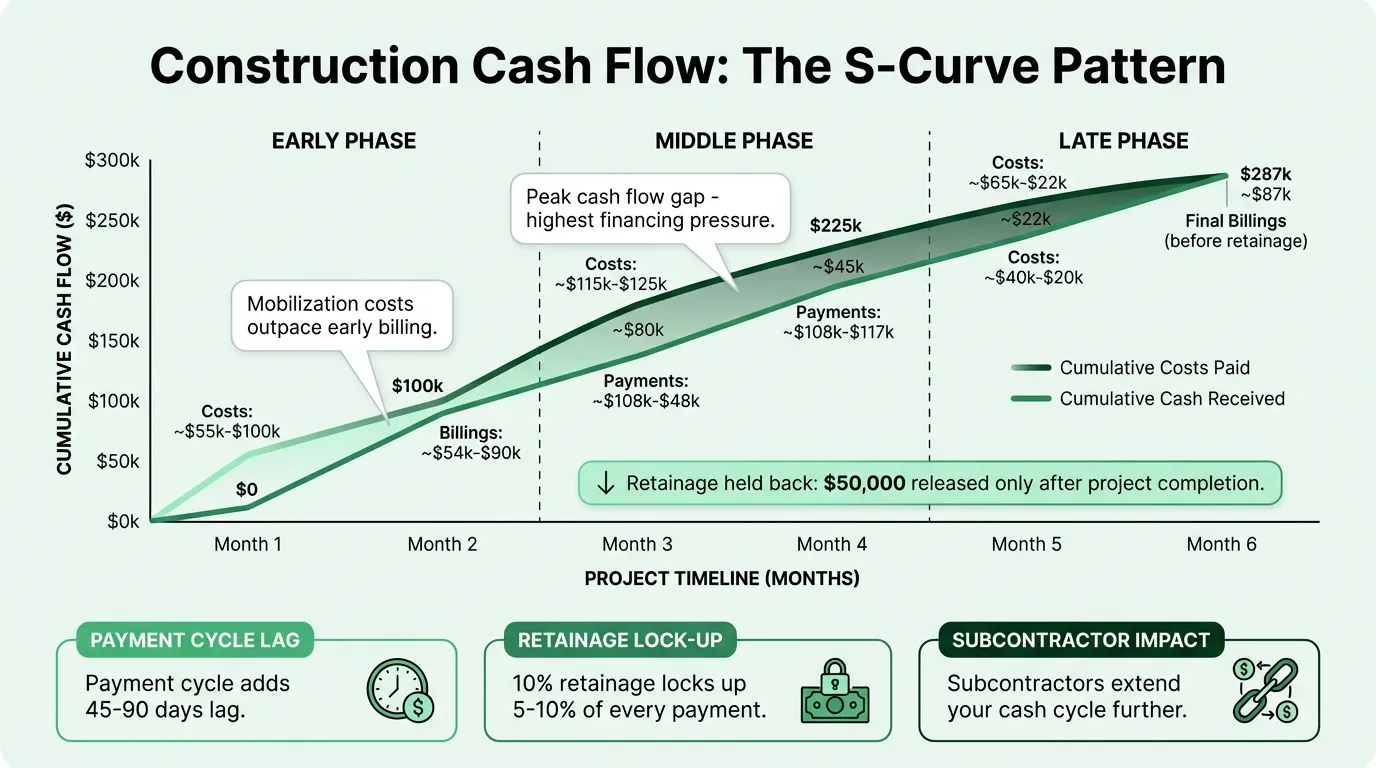
Review the provided cash flow infographic, which illustrates the 'Cash Flow Gap' between when an electrical contractor pays for labor and materials (outflow) and when they finally receive payment (inflow).
If a contractor has an invoice that reaches 45 days past due, how does the protocol's requirement to call a 'Decision-Maker'—rather than just 'Accounts Payable'—specifically analyze and address the financial risk depicted in the Month 3 gap?
An electrical contractor is reviewing their collection procedures. For a commercial invoice that is 45 days past due, an office assistant suggests calling the customer’s Accounts Payable department rather than the business owner (the decision-maker), arguing that 'it is better to stay in the clerk’s good graces since they are the ones who actually process the payments.'
How should the contractor evaluate the effectiveness of this assistant's reasoning?
In the mid-stage collection escalation process for an electrical contractor, at what point should the contractor send a formal past-due letter that references the original due date and the specific late-fee terms found in the contract?